

When a tooth has been weakened by decay, a fracture, or a failing old filling, not every situation calls for a full crown. Sometimes the damage is more extensive than what a standard filling can reliably restore, but not severe enough to justify covering the entire tooth. For those cases, dental inlays and onlays offer a precise, durable, and natural-looking solution that rebuilds the tooth while preserving as much healthy structure as possible.
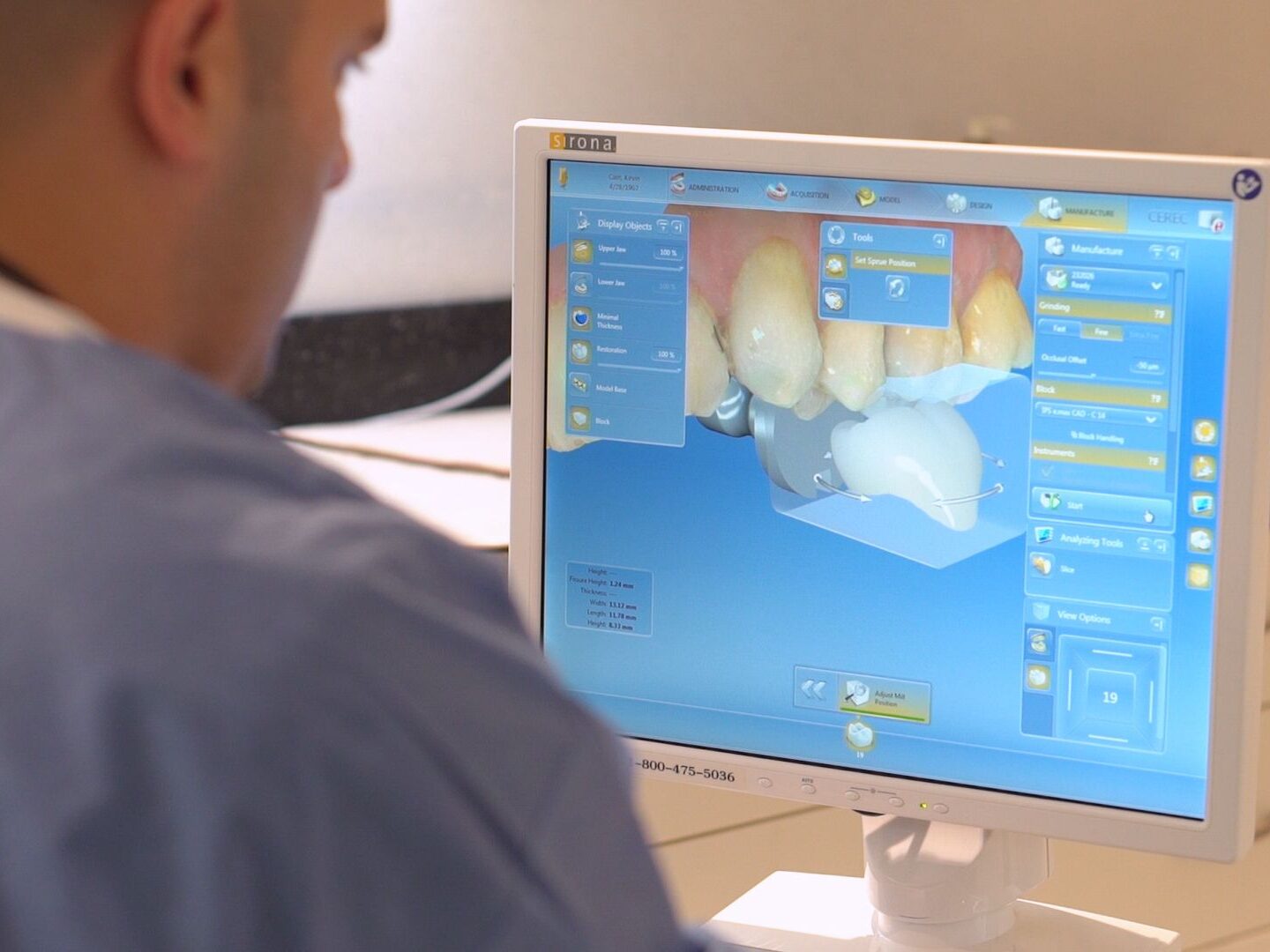
At Longwood Dental Group, our team crafts inlays and onlays as part of our comprehensive general dentistry care. We combine our on-site dental laboratory with CEREC technology to produce restorations with a precise, custom fit that blends seamlessly with your natural teeth. Our practice has been serving patients in Brookline and the greater Boston area for over 40 years, and the attention to fit, function, and appearance that defines our approach is reflected in every restoration we place.
What Are Dental Inlays and Onlays
Inlays and onlays are custom-fabricated dental restorations made from porcelain, composite resin, or gold, bonded permanently to a damaged or decayed tooth. They occupy the middle ground between a filling and a full crown, making them the preferred choice when the damage to a tooth is too extensive for a filling but not severe enough to require covering the entire tooth. The American Dental Association classifies these as indirect restorations, meaning they are fabricated to precise specifications outside the mouth and then bonded securely in place, which allows for greater accuracy in fit and superior material strength compared to direct fillings.
The distinction between an inlay and an onlay comes down to location and coverage. An inlay fits within the grooves of a tooth’s chewing surface, restoring the central area between the cusps. An onlay extends further, covering one or more of the tooth’s cusps as well, which is why onlays are sometimes called partial crowns. The right choice depends on the extent and location of the damage, which our team assesses during your exam.
When an Inlay or Onlay Is the Right Choice
Several situations make an inlay or onlay the most appropriate restorative path. Our team commonly recommends them for patients who present with any of the following:
- A cavity too large to be reliably restored with a standard composite or amalgam filling
- A cracked or fractured tooth where the damage does not yet require a full crown
- An older, worn, or failing large filling that needs replacement with something stronger and more durable
- Moderate decay on the chewing surface of a back molar or premolar
- A tooth that requires structural reinforcement beyond what a direct filling can offer
If the damage is minor, a standard dental filling may be entirely sufficient. If it is more extensive, a dental crown may be the better path. Our team walks you through the recommendation and the reasoning before any treatment begins so you understand exactly what is being proposed and why.
How Inlays and Onlays Compare to Fillings and Crowns
One of the most common questions patients have is how inlays and onlays differ from the restorations they already know. The table below outlines the key differences across the three main options.
| Filling | Inlay or Onlay | Crown | |
|---|---|---|---|
| Best for | Minor decay or small damage | Moderate decay, large cavities, failing fillings | Severe damage or full structural compromise |
| Tooth structure preserved | Maximum | High — only damaged portion removed | Less — entire surface is reshaped |
| Material | Composite or amalgam | Porcelain, composite, or gold | Porcelain, ceramic, or metal |
| Typical longevity | 5–10 years | 10–30 years with proper care | 10–15+ years |
| Fabrication | Direct — placed same visit | Lab-fabricated — two appointments | Lab-fabricated — two appointments |
Materials We Use for Inlays and Onlays
Our team works with three primary materials depending on the location of the tooth, the degree of damage, and your preferences. Porcelain is the most widely requested option because it closely matches the color and translucency of natural enamel, making the restoration virtually invisible once bonded in place. It is also highly resistant to staining and holds up well under normal biting and chewing forces. Composite resin is another tooth-colored choice that works well in certain locations and cases. Gold, while less commonly chosen for aesthetic reasons, remains one of the most durable materials available and may be the best option for certain back teeth where appearance is less of a priority and strength is paramount. Our team discusses the tradeoffs of each material and helps you choose the right fit for your tooth and your goals. We never use one-size-fits-all solutions. Because we operate our own dental laboratory on site, we maintain close control over material selection and fit throughout the fabrication process.
What to Expect During Treatment
Inlays and onlays are typically placed over two appointments. Our team uses our in-house laboratory — along with CEREC technology — to fabricate restorations with accuracy that reflects in the final fit and bite. Here is what the process looks like from start to finish.
How to Care for Your Inlay or Onlay
Caring for an inlay or onlay is no different from caring for your natural teeth. Brushing twice daily, flossing regularly, and keeping up with your scheduled dental cleanings and exams will go a long way toward extending the life of your restoration. With proper care, porcelain and gold inlays and onlays can last well over a decade. Avoiding habits like chewing ice or using your teeth to open packaging will help protect the restoration and the surrounding enamel over time. During your follow-up visits, our team monitors the restoration to ensure the fit and bite remain comfortable and that the margins are holding securely.
Frequently Asked Questions About Dental Inlays and Onlays in Brookline
Here are the questions we hear most often from patients considering inlays or onlays for the first time.
Schedule Your Inlays and Onlays Consultation at Longwood Dental Group
Longwood Dental Group has been serving patients in Brookline and the greater Boston area for over 40 years, earning recognition as a Best of Boston dental practice for the quality and precision of our restorative and cosmetic care. Where science meets art, our team produces results that are both structurally sound and visually indistinguishable from natural teeth. From material selection to the final fit, our in-house dental laboratory and CEREC technology allow us to maintain control over every detail of your restoration.
If you have a damaged tooth that may benefit from an inlay or onlay, or if you would like a second opinion on a filling or crown recommendation, we encourage you to reach out through our online contact form. Our team is ready to help you find the most conservative, lasting solution for your smile.